No Two Batches Alike: Why Every Jar of Honey Is Different
If you have only ever bought honey from a grocery store shelf, you have been trained to expect one thing: a jar of honey should look, taste, and pour exactly like the last one. That consistency is manufactured. Real honey does not work that way — and once you understand why, you will never look at a jar the same way again.
I learned this firsthand keeping my own hives. Even honey pulled from the same apiary, even from hives sitting a few feet apart, can come out looking and tasting like two different products. That is not a flaw. That is honey being honest about where it came from.
Honey has terroir, just like wine
Wine people have a word for this: terroir. It means the taste of a place — the way soil, climate, and season all show up in the final bottle. Honey has terroir too, and arguably even more of it, because honey is nothing but concentrated nectar from whatever happened to be blooming.
A honey bee's flavor palette is written by her forage. Whatever flowers the colony is working in a given stretch of weeks is what ends up in the comb. Change the flowers, and you change the honey — the color, the aroma, the taste, the texture, even how fast it crystallizes and what it might do for you nutritionally.
Why batches differ, even from the same apiary
Here are the big forces that make one batch different from the next.
The season. This is the largest one. Spring honey and late-summer honey are often completely different. Early in the year, colonies work things like fruit blossoms, dandelion, and clover, which tend toward lighter, milder, more delicate honey. As the season rolls on and hotter, later-blooming plants take over, the honey often turns darker, bolder, and more robust. My own first honey came off around the Fourth of July, and a later pull tastes nothing like an early-summer harvest would, same bees, different month, different honey.
The floral source. Bees forage over a wide radius, and no two stretches of the season offer the same menu. One flow might be dominated by one nectar source; the next by something else entirely. Light honeys like clover are mild and sweet; darker honeys carry deeper, sometimes almost molasses-like or malty notes. Wildflower honey which is really just "whatever was blooming" honey, is a moving target by design.
The location. This is the one that surprises people most. I run two apiaries, one in my backyard and one out in Watertown, and honey from those two sites will not be identical, even in the same season. The plants growing within flying distance of each apiary are different, so the nectar is different, so the honey is different. Two locations, two flavors.
The individual hive. Even hives sitting side by side in the same yard can produce noticeably different honey. Colonies have their own personalities and foraging habits, and a strong hive working a slightly different patch of bloom than its neighbor will bottle a slightly different jar. Extract them separately and you will taste it.
The year itself. Rainfall, temperature, and how each plant species fared that season all shift the balance of what is blooming and how much nectar it gives. This year's clover honey will not be identical to next year's. That is why a beekeeper cannot promise you the "same" honey forever — the weather won't allow it.
What the differences actually mean for you
The variation is not just about flavor. It shows up in a few practical ways.
Taste ranges wildly. Light and floral, buttery and mild, dark and bold, sharp and herbal, all of it is honey, and all of it comes from where and when the bees foraged. Part of the fun is tasting a lineup and finding the one you love.
Color is a clue. As a general rule, lighter honey is milder and darker honey is stronger in flavor. Color is a quick visual shorthand for what your taste buds are about to get.
Texture and crystallization differ. Some honeys stay runny for a long time; others granulate into a thick, spreadable crystal within weeks. That comes down to the sugar makeup of the particular nectar, and it is completely natural. Crystallized honey has not gone bad, it has just done what raw honey does. A gentle warm-water bath brings it right back to liquid.
Even the potential benefits shift. Different floral sources carry different plant compounds, antioxidants, and pollens. Darker honeys, for instance, tend to carry more antioxidant content than very light ones. This is one reason people who use local raw honey often prefer it batch by batch, matched to the season and their local bloom. (I'll add the standard, honest caveat here: honey is a food, not a medicine, and none of this is a health claim — but the compositional differences between batches are real.)
Why I bottle it honestly
Big commercial honey is often blended and heat-processed specifically to erase all of this, to hit one uniform color and flavor jar after jar, year after year. I go the other way on purpose. When I extract, I keep things simple and raw so that each batch tastes like the season and the place it came from.
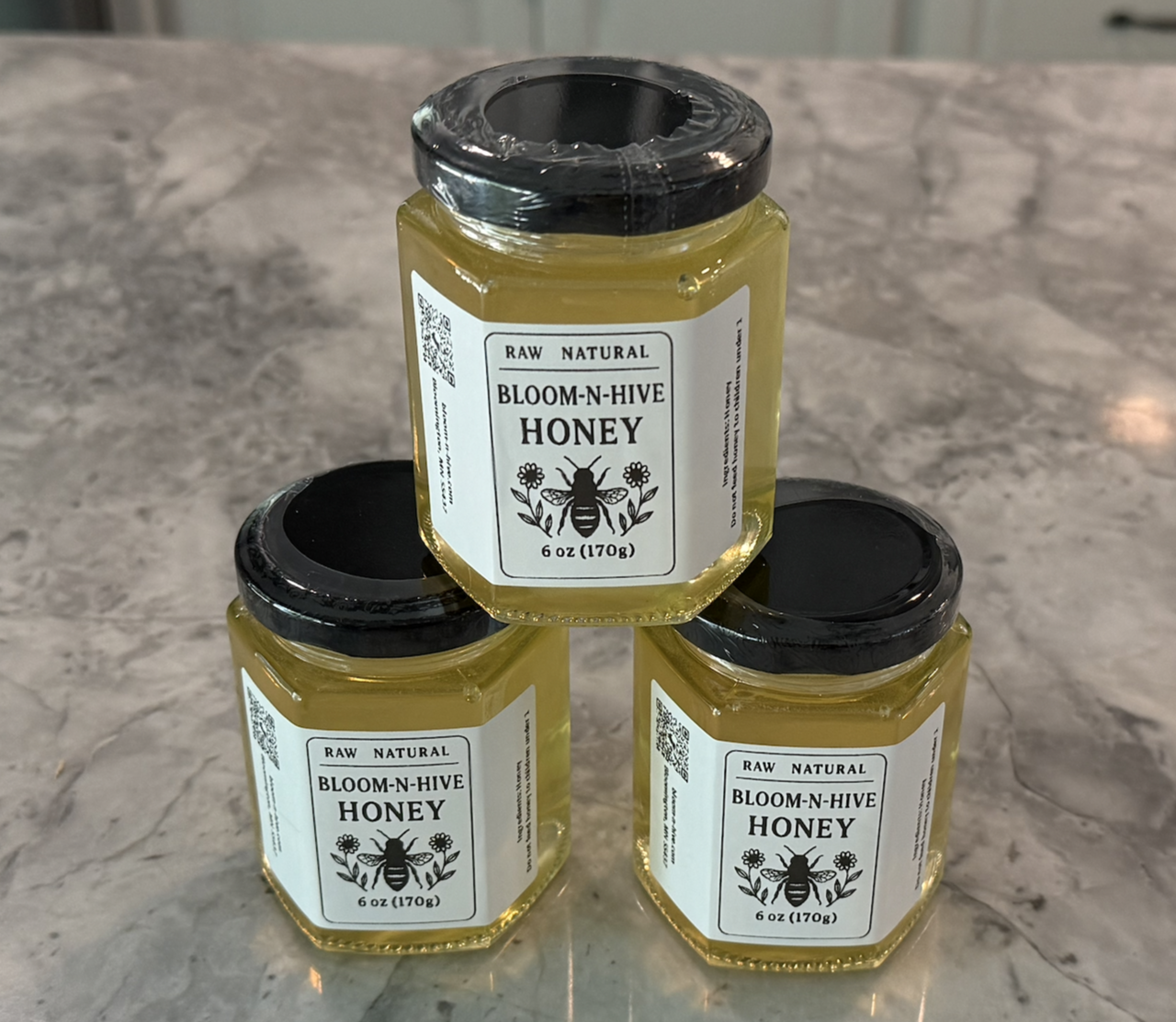
So if you buy two jars of Bloom-N-Hive honey and they are not quite the same, one lighter, one darker, one runnier, one already starting to crystallize, that is exactly the point. You are not buying a manufactured product tuned to be identical forever. You are buying a snapshot of a specific set of hives, in a specific place, at a specific moment in the season.
No two batches alike. That is not a bug. That is the whole beauty of real honey.
— Craig, Bloom-N-Hive